 Paljet Pte Ltd Singapore
Vibrating Screen Cast Alloy Screen Plate | PALJET
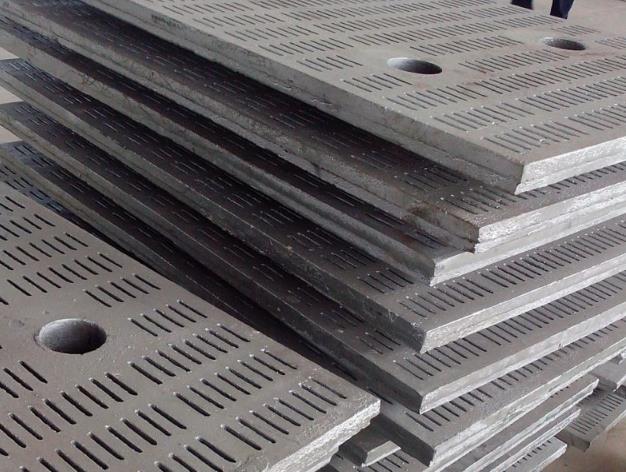
Vibrating Screen Cast Alloy Screen Plate
1. Product Positioning & Application Fields
Resin coated sand shell mold cast alloy vibrating screen plate is professional wear spare part for sintering and mining vibrating screening machines. Produced by resin coated sand shell casting technology, it is positioned as high-precision wear-resistant alloy screen plate with smooth surface and dense metallurgical structure. Compared with conventional sand casting, shell molding delivers better dimensional accuracy, fewer burrs and well-formed sieve holes with smaller machining allowance. It can withstand continuous alternating vibration and impact abrasion of high-temperature materials. Custom patented convex screen plates are available to extend service life.
Typical applications include hot vibrating screens and cold mineral vibrating screens for metallurgical sintering, ore classification in mines, aggregate screening, coal washing plants, cement clinker, power plant ash separation and solid waste treatment. It fits circular vibrating screens, linear vibrating screens and hot mineral vibrating screens. OEM replacement parts are available for sintering production lines such as Anshan Iron and Steel. It solves common problems including rapid wear, aperture deformation, high-temperature cracking and frequent shutdown maintenance.
2. Process Capability Overview
Paljet integrates resin coated sand shell mold casting, heat treatment and precision machining. Equipped with hot box core shooters and medium-frequency induction furnaces, we specialize in manufacturing wear-resistant alloy screen plates.
Mold development: Conduct casting CAE solidification simulation based on customer drawings, design gating and riser systems, fabricate metal molds.
Resin coated sand shell forming: Produce sand shells and sand cores by hot box core shooting machine. Sand is thermally cured to form high-strength thin shell molds to guarantee precise sieve hole contour.
Mold assembly: Bond upper and lower shell molds and sand cores, fill backup sand or steel shot for support to prevent mold swelling and metal leakage.
Melting: Medium-frequency induction furnace melting. Alloy grades such as high-chrome cast iron and high manganese steel are precisely formulated with deoxidation, slag removal and refining.
Pouring, cooling and shell shakeout: After solidification, break sand shells and clean castings.
Post-processing: Cut off gates and risers, perform shot blasting.
Heat treatment: Quenching and tempering to optimize microstructure, release casting stress and improve hardness and fatigue resistance.
Precision machining: Drill mounting holes, machine locating surfaces and correct flatness. Anti-rust treatment is optional.
Available materials: High-chrome wear-resistant cast iron, Mn13, Mn13Cr2 high manganese steel. Custom designs with round holes, square holes, slot holes and convex structures are available for small and mass orders.
3. Quality Control & Inspection
Full-lifecycle quality traceability is implemented from raw material incoming inspection to finished product delivery. The company holds ISO9001 certification.
Raw material inspection: Spectral analysis for scrap steel, ferrochrome, ferromanganese and alloy materials, material certificate verification.
On-furnace test: Real-time spectral analysis during melting to adjust alloy composition and retain samples for each heat.
Shell inspection: Check shell strength, dimension and curing status to avoid porosity and sand sticking defects.
Visual inspection of blanks to detect surface defects including porosity, shrinkage, cracks, cold shuts and inclusions.
Non-destructive testing: UT ultrasonic testing and MT magnetic particle testing to detect internal and surface cracks.
Sampling mechanical tests: Hardness test, impact test and tensile test to verify wear and impact resistance.
Dimensional inspection: Calipers, special gauges and CMM to check aperture size, plate thickness, hole spacing and flatness.
Shipment documentation: Material certificates, heat treatment records, NDT reports and dimensional inspection reports are issued. Batch records are archived, and third-party inspection by SGS / TÜV is supported.
4. Customization Process
Technical consultation: Customers provide 2D/3D drawings, aperture specifications, material & hardness requirements, mounting dimensions, working conditions, quantity and lead time. Our engineering team evaluates resin coated sand casting feasibility, optimizes design and provides quotation.
Casting simulation & mold fabrication: CAE filling and solidification simulation, gating and riser optimization, metal mold machining.
Prototype trial production: Sand shell manufacturing, mold assembly, pouring, heat treatment and machining to produce first article samples.
Full first-article inspection: Complete dimensional, material, mechanical and NDT tests, submit full inspection report for customer approval.
Mass production: Start bulk shell casting after sample approval. IPQC inline inspection monitors key parameters including core shooting, pouring and heat treatment.
Final inspection, packaging & shipment: Full inspection of finished goods, prepare QC documents, anti-rust packaging and delivery.
After-sales technical support: Track on-site screening performance and optimize material grade and casting process according to field wear feedback.
Note: The above information is reviewed by Engineer Song Enyu from PALJET.
Next product:Cast Curved Alloy Screen PlatesPrevious product:Lost Foam Cast Universal Joint Yoke Castings