 Paljet
Large Cast Steel/ 304 valve Bodies|Paljet
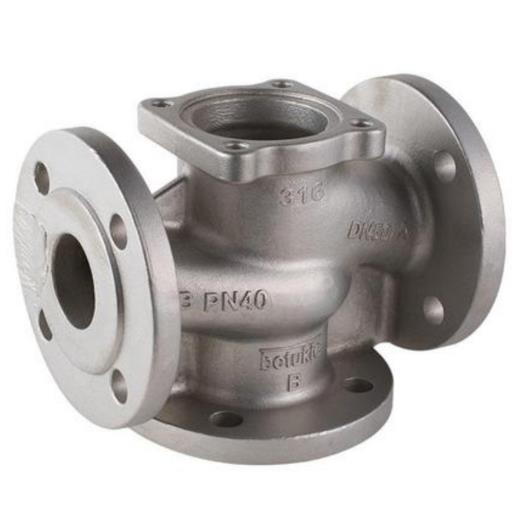
Large cast steel / 304 valve body
1. Product Positioning & Application Fields
Large cast steel valve body is the primary pressure-bearing component for industrial valves, manufactured by hybrid EPS foam pattern silica sol ceramic shell casting process (expendable pattern silica sol shell casting). Positioned as large near-net-shape castings combining excellent formability for large parts, superior surface finish, precise internal runner geometry and dense metallurgical structure. This hybrid technology integrates the forming advantage of lost foam foam pattern and high-temperature refractory performance of silica sol shell. Instead of wax patterns, EPS foam is used to produce the integral valve body prototype. Multi-layer silica sol refractory coating is applied on the foam surface to build robust ceramic shells. The foam is removed by high-temperature firing, and molten steel is poured into the prefabricated silica sol shell cavity. Compared with conventional lost foam, it drastically reduces blowholes and slag inclusions. Compared with pure silica sol wax investment casting, it can produce much larger valve bodies with lower mold cost and is suitable for large bore complex valve bodies. The valve body delivers outstanding pressure resistance, fatigue resistance and medium corrosion resistance, serving as replacement for imported large cast steel valve bodies.
Typical applications include oil & gas transmission pipelines, coal chemical industry, thermal power auxiliary equipment, metallurgical pipe networks, chemical process piping, water treatment and shipbuilding. Suitable for gate valves, globe valves, ball valves, check valves and butterfly valves under high temperature, high pressure, flammable, explosive and corrosive media. It solves major pain points of traditional casting processes: rough surface and runner sand sticking, shrinkage and leakage in sand casting; high porosity defects in ordinary lost foam; prohibitive high cost for large parts in pure silica sol wax investment casting. We provide OEM large cast steel valve bodies for valve manufacturers.
2. Process Capability Overview
Anshan Leibo Metallurgical owns integrated production lines for hybrid EPS foam pattern silica sol shell casting, heat treatment and CNC precision machining, capable of manufacturing large bore valve bodies with complex inner cavities.
EPS foam pattern fabrication: Conduct casting CAE filling and solidification simulation based on customer 3D drawings, design gating and feeding system. Produce integral EPS foam prototype by foam molding or CNC machining, reserve casting shrinkage allowance, bond gating system to form foam pattern clusters.
Multi-layer silica sol shell making: The face coat adopts silica sol binder with zircon flour and zircon sand. Transition and backup coats use silica sol refractory slurry. Repeat dipping, stuccoing and constant-temperature drying to build multi-layer high-strength ceramic shells on foam clusters, to precisely reproduce flanges, complex inner cavities and flow channels.
High-temperature firing for foam removal: Place shell with foam inside high-temperature furnace. EPS foam gasifies and burns out completely. The ceramic shell is cured to eliminate residual carbon and improve high-temperature shell strength to prevent shell cracking or metal leakage during pouring.
Melting & pouring: Medium-frequency induction furnace melting for WCB, WCC, CF8, CF8M, WC6, WC9 carbon steel, stainless steel and Cr-Mo heat-resistant steel. Deoxidation, slag removal and refining are performed, then molten steel is poured into preheated silica sol shells under controlled temperature.
Cooling & shell shakeout: Ceramic shells are knocked off after solidification, followed by shot blasting to remove surface scale.
Weld repair & heat treatment: Repair minor qualified defects, then normalize, quench & temper or solution heat treatment to release casting stress and optimize microstructure for required strength, toughness and pressure bearing capacity.
Precision machining: Machine flange faces, bolt holes, sealing surfaces and flow passages to control geometric tolerances. Passivation and anti-rust treatment are available upon request.
Available materials: WCB, WCC, CF8, CF8M, WC6, WC9. We accept orders for large bore valve bodies with complex inner cavities, both small and mass production.
3. Quality Control & Inspection
Full-lifecycle quality traceability is implemented from raw material incoming inspection to finished product delivery. The company holds ISO9001 certification, and inspection can follow API, ASME, GB and other international valve standards.
Raw material inspection: Spectral analysis for scrap steel and alloy additives, material certificate verification.
On-furnace test: Real-time optical emission spectrometry during melting to adjust alloy composition and retain samples per heat.
Foam pattern & silica sol shell inspection: Check foam dimension and bonding quality; test shell thickness, strength, drying and firing quality to prevent porosity, inclusion and metal penetration defects.
Visual inspection of blanks: Inspect flanges, flow channels and outer surfaces for cracks, cold shuts, sand sticking and blowholes.
Non-destructive testing: UT ultrasonic testing, MT magnetic particle testing, PT penetrant testing. RT radiographic testing is available for high-pressure service to detect internal and surface defects.
Sampling mechanical tests: Tensile test, impact test and hardness test; high-temperature mechanical test optional for high-temperature working conditions.
Dimensional inspection: Calipers, micrometers and CMM to verify flange size, runner diameter, bolt hole position tolerance and wall thickness.
Hydrostatic / air pressure test: Shell strength test in accordance with GB/T13927 and API598; sealing performance test available on request.
Shipment documentation: Material certificates, heat treatment records, full NDT reports, dimensional inspection reports and pressure test certificates.
4. Customization Process
Technical consultation: Customers provide 2D/3D drawings, material grade, pressure class, design standards, NDT requirements, medium working conditions, quantity and lead time. Our engineering team evaluates hybrid EPS foam silica sol shell casting feasibility, optimizes gating & feeding system and provides quotation.
Casting simulation & foam mold fabrication: CAE filling and solidification simulation, riser optimization, manufacture foam forming mold or CNC machine foam prototype.
Prototype trial production: EPS foam pattern forming, pattern assembly, silica sol shell making, high-temperature firing for foam removal, pouring, heat treatment and machining to produce first article valve body samples.
Full first-article inspection: Complete dimensional, material, mechanical, NDT and hydrostatic pressure tests. Submit full inspection report for customer approval.
Mass production: Start bulk hybrid silica sol shell casting after sample approval. IPQC inline inspection monitors key parameters including shell making, firing, melting and heat treatment.
Final inspection, packaging & shipment: Full inspection of finished goods, prepare complete QC documents, anti-corrosion packaging and delivery.
After-sales technical support: Track on-site valve operation performance and optimize casting process and alloy formula according to field feedback.
Note: The above information is reviewed by Engineer Song Enyu from PALJET.
Next product:Cast Iron HousingsPrevious product:Cast Curved Alloy Screen Plates
for Sinter Ring Hammer Crusher for Lime