 Paljet
Cast Iron Housings by Resin Coated Sand Process
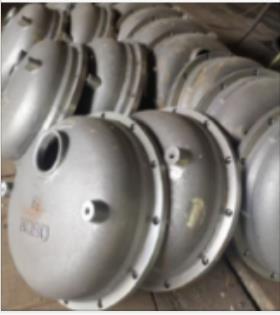
cast iron housing
1. Product Positioning & Application Fields
Resin coated sand shell mold cast iron housing is the core cast component for equipment load bearing, protection and medium containment, integrally formed by resin coated sand hot box shell molding process. Positioned as medium & large cast iron housings with high dimensional accuracy, smooth surface finish, dense microstructure and uniform wall thickness. Shell molding produces castings with minimal burrs and small machining allowance. Complex features including inner cavities, flanges and mounting bases can be formed in one shot. The housing features excellent rigidity, vibration damping property, sealing performance and fatigue resistance with good pressure bearing capacity, serving as replacement for imported cast iron housings.
Available grades: Grey cast iron HT200, HT250, ductile iron QT450-10, QT500-7, QT600-3.
Typical applications: Metallurgical equipment, mining machinery, pump housings, gear reducer boxes, fan casings, cast iron valve bodies, hydraulic equipment housings and conveyor machine shells. Suitable for normal and medium temperature working conditions for bearing loads or holding lubricating oil, cooling water and dust-laden materials. It solves common drawbacks of conventional green sand castings such as rough surface, large dimensional deviation, blowholes, sand inclusions, oil/dust leakage and excessive machining allowance. We provide OEM cast iron housings for machinery manufacturers.
2. Process Capability Overview
Paljet owns integrated production lines of resin coated sand shell casting, heat treatment and precision machining, specializing in cast iron housings with complex structures.
Mold development: Conduct casting CAE filling and solidification simulation based on customer 2D/3D drawings, design gating and feeding system, machine metal hot box molds.
Resin coated sand shell & core making: Shoot resin coated sand into hot box core shooter and heat cure to form sand shells and inner sand cores, guaranteeing high precision of housing profile, internal cavities and flange mounting surfaces while reducing sand sticking and burrs.
Mold assembly: Align and bond upper and lower sand shells and sand cores, fill backup sand for support to prevent mold swelling and metal leakage.
Melting: Medium-frequency induction furnace melts pig iron, scrap steel and returns. Adjust chemical composition for grey iron or ductile iron; spheroidization and inoculation treatment for ductile iron, followed by deoxidation and slag removal refining.
Pouring, cooling and shell shakeout: Molten iron pouring, holding and cooling. Break sand shells and clean castings after solidification.
Post-processing: Cut off gates and risers, shot blast to remove scale; weld repair minor defects.
Heat treatment: Stress relief annealing to eliminate residual casting stress, stabilize dimensions and reduce later deformation; normalizing available upon request.
Precision machining: Machine flange faces, bolt holes, seal grooves and inner cavities to control geometric tolerances. Anti-rust treatment and painting can be applied.
We produce housings with complex inner cavities, flanges and mounting bosses, supporting small and mass orders.
3. Quality Control & Inspection
Full-lifecycle quality traceability is implemented from raw material incoming inspection to finished product delivery. The company holds ISO9001 certification, and inspection follows national GB standards for cast iron.
Raw material inspection: Spectral analysis for pig iron, scrap steel, alloys, inoculants and nodulizers, material certificate verification.
On-furnace test: Real-time optical emission spectrometry and thermal analysis during melting to adjust iron composition, retain samples per heat.
Shell & core inspection: Check shell strength, curing quality and dimensions, detect sand core deformation in advance to avoid blowholes and sand inclusion defects.
Visual inspection of blanks: Inspect outer surfaces, inner cavities and flanges for blowholes, shrinkage, cold shuts, inclusions and cracks.
Non-destructive testing: UT ultrasonic testing, MT magnetic particle testing; PT penetrant testing optional for pressure-bearing housings to detect internal and surface defects.
Sampling mechanical tests: Tensile test and hardness test; metallographic inspection of nodularity for ductile iron to verify strength and toughness.
Dimensional inspection: Calipers, micrometers, custom jigs and CMM to check outer geometry, wall thickness, flange size and bolt hole position tolerance.
Leakage test: Hydrostatic or air pressure test available for pump and fluid housings to verify sealing performance.
Shipment documentation: Material certificates, heat treatment records, NDT reports, dimensional inspection reports and metallurgy reports.
4. Customization Process
Technical consultation: Customers provide 2D/3D drawings, material grade, dimensional tolerances, pressure & working requirements, mounting dimensions, quantity and lead time. Our engineering team evaluates resin coated sand casting feasibility, optimizes housing structure and gating scheme and provides quotation.
Casting simulation & mold fabrication: CAE filling and solidification simulation, feeding system optimization, manufacture hot box metal molds.
Prototype trial production: Resin coated sand core shooting & shell making, mold assembly, melting & pouring, stress relief annealing and machining to produce first article housing samples.
Full first-article inspection: Complete dimensional, material, metallurgical, mechanical and NDT tests; leakage test on demand. Submit full inspection report for customer approval.
Mass production: Start bulk resin coated sand casting after sample approval. IPQC inline inspection monitors key parameters including core shooting, shell making, melting, pouring and heat treatment.
Final inspection, packaging & shipment: Full inspection of finished goods, prepare complete QC documents, anti-rust & painted protective packaging and delivery.
After-sales technical support: Track on-site equipment operation performance and optimize casting process and material grade according to field feedback.
Note: The above information is reviewed by Engineer Song Enyu from PALJET.
Next product:8-20t Ingot MoldsPrevious product:Large Cast Steel/ 304 valve Bodies