 KOSO 200 Series valves|PALJET
KOSO 200 Series valves |PALJET
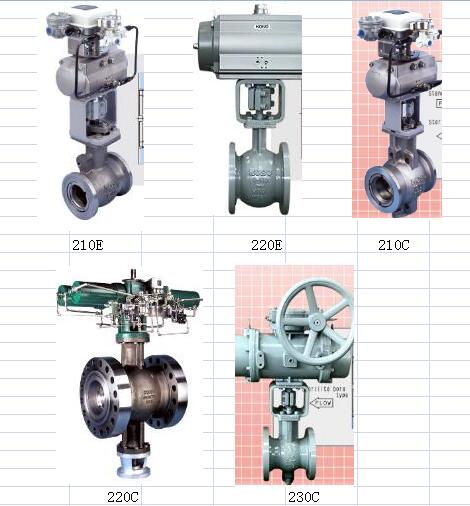
KOSO 200 Series valves
1. 210E (Eccentric Segmented Ball Valve, Wafer Type)
Core Features:
Structure: Eccentric segmented ball valve core, wafer connection, DN25~DN300; pressure rating ANSI150~600 / JIS10~40K, media temperature -45~400℃, Nippon Koki Co., Ltd....
Flow Characteristics: Approximately linear, adjustable ratio 100:1; eccentric structure, the valve core detaches from the seat instantly upon opening, reducing seat friction and wear.
Advantages: Small size and light weight, large Cv; replaceable seal rings for diameter reduction; metal seat Class IV, soft seal can reach Class VI airtight grade.
Shortcomings: Wafer type, high requirements for installation flange alignment; maximum temperature limit is lower than the C series.
Applications
Chemical, petrochemical, thermal power: Ordinary liquid and gas regulation; high-viscosity media, media containing a small amount of fine particles
Retrofit projects with limited space and a need for large flow capacity; low-pressure to medium-pressure regulation loops
Not recommended: Highly abrasive large particles, >400℃ high-temperature working conditions.
2. 220E (Eccentric Segmented Ball Valve, Flanged RF)
Core Features:
Structure: Eccentric valve core, RF flange connection; DN25~DN400; ANSI150~300, JIS10~20K, -45~400℃, Nippon Koki Co., Ltd...
Flow Characteristics: Approximately linear, adjustable ratio 100:1, consistent with the valve core principle of the 210E; the difference is the flange connection, which provides stronger installation rigidity.
Advantages: Flanged type, easy to disassemble and install; larger diameter; eccentric design prevents sticking, suitable for frequent regulation; soft seal provides airtight shut-off.
Shortcomings: Pressure rating upper limit is lower than the 210E; weight and cost are higher than the 210E of the same diameter.
Applications
Petrochemical, water treatment, papermaking: Large-diameter gas / liquid regulation, pipelines requiring flange connections
Fan outlets, circulating water, low-pressure steam regulation; loops requiring both regulation and airtight shut-off
Suitable for large-diameter low-pressure working conditions, not for high-temperature and high-pressure severe working conditions.
3. 210C (Concentric Segmented Ball Valve, Wafer Type, with V-notch Plate)
Core Features:
Structure: Concentric segmented ball, wafer connection; DN25~DN300; ANSI150~600 / JIS10~40K, media temperature -45~500℃, Nippon Koki Co., Ltd...
The plate features a V-notch, with an inherent flow characteristic approximately equal to percentage; extremely high adjustable ratio (up to 500:1); the V-notch provides a shearing effect.
Advantages: V-notch shears fibers and pulp; anti-tangling; large adjustable ratio, wide-range regulation from small to large flow; high-temperature resistance superior to the E series.
Shortcomings: Concentric structure, the valve core is in contact with the seat throughout the entire stroke, resulting in greater seat wear compared to the eccentric E series; the V-notch is subject to erosion by hard particles.
Applications
Chemical, papermaking, chemical fiber: Media containing fibers, pulp, sludge, suspended slurry, media containing fine solid particles
Wide-range ratio regulation working conditions (extremely large flow fluctuations); high-viscosity fluids; sewage, polymer solutions
Typical: Papermaking black liquor, chemical fiber slurry, wastewater neutralization regulation loops.
4. 220C (Concentric Segmented Ball Valve, Flanged RF, V-notch Plate)
Core Features:
Structure: Concentric V-notch plate, RF flange connection; DN25~DN450; JIS10K, -45~500℃, Nippon Koki Co., Ltd....
Flow Characteristics: Equal percentage, V-notch shearing structure; principle same as 210C, flange structure, supports larger diameters
Advantages: Flange installation, good reliability, large-diameter slurry regulation; V-notch shears fibers; wide regulation range.
Shortcomings: Pressure rating upper limit is not high; the seat is eroded by the media, and the service life decreases in hard particle working conditions.
Applications
Papermaking, mining, large-diameter slurry pipelines in chemical industry; regulation of fiber-containing waste liquids, mineral slurries (fine particles).
Process loops requiring flange connections and large diameters, while simultaneously accommodating regulation + shut-off; process loops with extremely large flow variation ranges
5. 230C (Concentric Segmented Ball Valve, Flanged RF/RTJ, No V-notch, Top and Bottom Double Seal)
Core Features:
Structure: Concentric segmented ball, through-stem, top and bottom double packing, no V-notch; DN150~DN600; ANSI150~1500, JIS20~63K; media temperature can reach 650℃, the highest pressure and temperature resistant model among these 5, Nippon Koki Co., Ltd...
The double packing structure offsets the fluid thrust on the valve stem and suppresses the thermal expansion of the valve stem; the plate is smooth without a V-notch.
Advantages: Preferred choice for high-temperature and high-pressure working conditions; resistant to thermal expansion; high differential pressure thrust is self-offsetting; suitable for pure media; can be equipped with RTJ flanges for high pressure
Shortcomings: No V-notch, cannot shear fibers and pulp; high price; not suitable for media containing fibers and large particles.
Applications
Oil refining, coal chemical, high-temperature processes: High-temperature hot oil, high-temperature steam, high-pressure process gas, pure high-temperature liquid phase.
High-temperature and high-pressure loops, working conditions where the valve stem undergoes significant thermal expansion; high differential pressure pure media regulation.
Boilers, hydrogenation units, high-temperature heat exchange systems; media is clean and free of fiber particles.
| Item | 210E | 220E | 210C | 220C | 230C |
|---|---|---|---|---|---|
| Valve body type | Eccentric segmented ball valve (Wafer) | Eccentric segmented ball valve (Flange RF) | Concentric V-port segmented ball valve (Wafer) | Concentric V-port segmented ball valve (Flange RF) | Large diameter concentric V-port segmented ball valve (Flange) |
| Nominal diameter | DN25~DN300 (1"~12") | DN25~DN450(1"~12") | DN25~DN450(1"~18") | Larger caliber and high flow rate version | |
| Nominal pressure | ≤3": Class150~600 / JIS10~40K ≥4": Class150~300 / JIS10~20K | Class150~300 / JIS10~20K | ≤6":Class150~600/JIS10~40K ≥8":Class150~300/JIS10~30K | JIS10K,Class150~300 | Based on sample selection |
| Medium temperature | -45 ~ +400℃ | -45 ~ +500℃ | |||
| Flow characteristic | Approximate linear | ||||
| Temperature | Normal Temperature):-17~+230℃,Moderate Temperature):-40~+450℃ | Soft seal -20~+220℃, hard seal -29~+425℃ | Soft seal -5~+180℃, hard seal -45~+400℃ | >Normal Temperature):-40~+200℃,Moderate Temperature):-45~+500℃ | |
| Flow characteristic | Eq%、Linear | Switch | Approximate Equal Percentage | ||
| Adjustable ratio | 100:1 | 100:1 ~ 500:1 | |||
| Valve body material | WCB/SCPH2, CF8(SCS13A), CF8M(SCS14A) | WCB/SCPH2, CF8, CF8M | |||
| Valve plate | SCS14A, hard chrome plated | V-notch segmented ball, SCS14A, Stellite weldable | V-notch segmented ball, SCS14A, | V-notch segmented ball, | |
| Stellite overlay Seat leakage | Metal seat: ANSI Class IV; Soft seat: ANSI Class VI | Class III, IV; Adjustable ratio: 50:1 | Soft seal Class VI; hard seal zero leakage | Fn/Fs type is ANSI Class VI; Cs/M/Ht type is 10−x 10−x rated capacity (DN80-150: ≤0.01% etc. | |
| Connection type | Wafe | Flange RF | Soft seal Class VI; hard seal zero leakage | Fn/Fs type is ANSI Class VI; Cs/M/Ht type is 10−x 10−x rated capacity (DN80-150: ≤0.01% etc. | |
Note: The above information is released by KOSO and reviewed by Engineer Huang Zhi from Paljet.
Next product: 300 Series ValvesPrevious product: KOSO KE Series valves+Actuators