 Paljet
High Manganese Steel Jaw Crusher Liner| Professional Casting
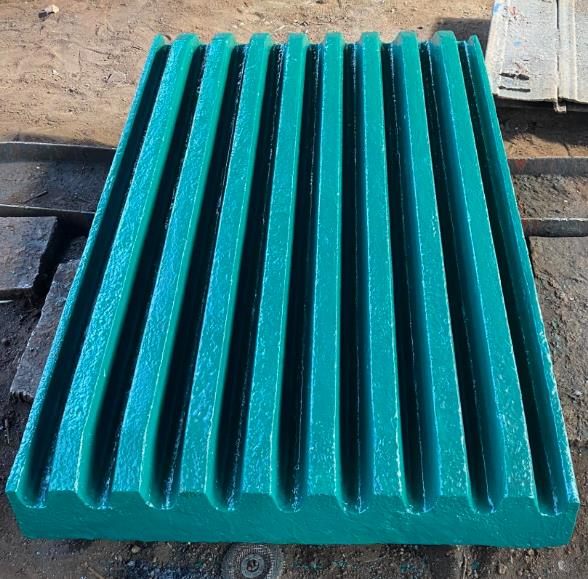
High Manganese Steel Jaw Crusher Liner
1. Product Positioning & Application Fields
The jaw crusher liner (jaw plate) is the core wear-resistant spare part of the jaw crusher. It adopts high manganese steel grades including Mn13, Mn13Cr2 and Mn18Cr2. Leveraging the unique work-hardening characteristic of high manganese steel: under continuous impact and extrusion from bulk ore, the working surface gradually becomes work-hardened with increased surface hardness, while the inner core of the casting maintains high toughness. It balances wear resistance and impact resistance, effectively preventing edge chipping, fracture and material peeling.
Product Positioning: Wear-resistant castings specially designed for primary crushing in mine and sand aggregate production lines. It is compatible with various double-toggle and single-toggle jaw crusher models at home and abroad, supporting OEM replacement supply. Our products are exported to Japan, South Korea, Southeast Asia and other overseas markets.
Application Fields: Metal ore beneficiation, sand and aggregate processing, metallurgical raw material crushing, construction waste recycling, stone raw material crushing.
Applicable Materials: Granite, basalt, iron ore, copper ore, river pebble, diabase and other medium-to-high hardness bulk ores and rocks.
Working Condition Features: Subjected to high-strength impact and extrusion friction from large lumps of materials, mainly used in the first-stage primary crushing operation.
2. Manufacturing Capability Overview
Paljet provides jaw plates via resin sand precision casting. We own a complete production line covering casting, heat treatment and machining, fully equipped with medium-frequency melting furnaces, large heat treatment kilns, CNC machining equipment, direct-reading spectrometers and other production and testing facilities. The complete technological process is shown below:
Pattern Making and Moulding: Produce wood or resin patterns according to 2D drawings or 3D models; optimize the gating and riser system to reduce casting defects such as shrinkage cavities, blowholes and slag inclusions.
Batching and Smelting: Select high-quality scrap steel, ferromanganese, ferrochrome and other alloy raw materials for melting in medium-frequency furnaces. A spectrometer monitors molten steel composition in real time to ensure manganese, carbon, chromium and other alloying elements meet the required standards.
Pouring and Controlled Cooling: Conduct temperature-controlled pouring and staged slow cooling to reduce internal casting stress and avoid thermal cracks.
Sand Removal, Riser Cutting and Shot Blasting: Cut off sprues and risers; remove oxide scale on casting surfaces by shot blasting to improve surface quality and reveal surface defects.
Water Toughening Heat Treatment (Core Process): Heat the castings to 1040~1100℃ and hold at this temperature for sufficient time to fully dissolve carbides into austenite, followed by rapid water quenching to obtain a full austenite matrix. This is the key process to realize the work-hardening performance of high manganese steel.
Finish Machining: Carry out CNC machining on assembly mating surfaces, positioning surfaces and mounting bolt holes to guarantee installation dimensional accuracy and ensure stable assembly between jaw plates and jaw crusher frames.
3. Quality Control & Inspection
The company complies with the ISO9000 quality system and implements full-process traceable quality inspection from raw material incoming check to finished product delivery.
Raw Material Incoming Inspection: Acceptance inspection for scrap steel and alloy auxiliary materials; spectral composition recheck before smelting.
In-process Inspection: Continuously record melting and pouring temperature, heat treatment furnace temperature and holding time. Test coupons are cast alongside each batch for mechanical property tests.
Finished Product Inspection Items
Visual inspection: Check surface casting defects including cold shut, cracks, blowholes and slag inclusion.
Dimensional inspection: Use calipers and templates to inspect overall dimensions and assembly tolerances.
Mechanical property test: Brinell hardness and impact toughness inspection.
Non-destructive testing: Magnetic Particle Testing (MT) / Penetrant Testing (PT), focusing on surface microcracks on working surfaces and assembly areas.
Batch File Management: Complete production and inspection records are retained for each batch. Material certificates and inspection reports can be provided upon request.
4. Customization Process
OEM and ODM customized production is available for jaw plates for non-standard models and severe working conditions:
Technical Communication: Customers provide jaw crusher model, drawings, photos of physical samples, as well as working condition parameters (ore hardness, feed size, production capacity and wear issues).
Material Scheme Confirmation: Our engineers evaluate on-site working conditions and recommend standard Mn13 high manganese steel or modified Mn13Cr2 / Mn18Cr2 high manganese steel options.
Quotation & Lead Time Confirmation: Issue a formal quotation after technical review and confirm the production cycle.
Mold Development: Fabricate patterns/molds for brand-new non-standard products.
Trial Casting & Sample Inspection: Produce trial samples, complete full inspection and issue inspection reports.
Mass Production: Start batch casting after customer approves the samples.
Final Inspection, Anti-rust Treatment, Packaging & Shipment: Re-inspection before delivery, anti-rust treatment, packaging and logistics arrangement.
Note: The above information is reviewed by Engineer Song Enyu from PALJET.
Next product:High-chromium cast iron grate barPrevious product:High Manganese Steel Cone Crusher Bowl Liner