 Paljet
High Chromium Cast Iron Grate Bars Made by Coated Sand Process
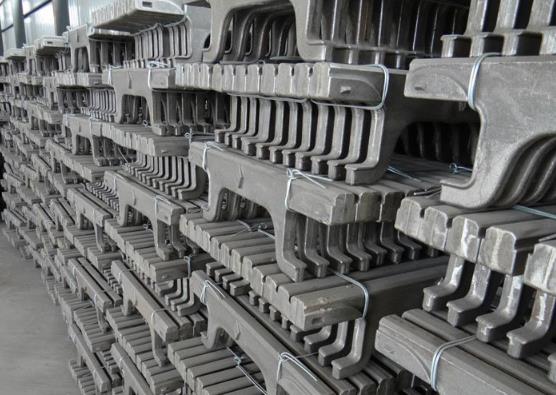
High-chromium cast iron grate bars
1. Product Positioning & Application Fields
High chromium cast iron grate bars are core heat-resistant and wear-prone spare parts for sintering machine trolleys. They are produced from high chromium cast iron grades including Cr15, Cr18 and Cr25. The hard carbide phases formed in the high chromium cast iron matrix deliver outstanding high-temperature wear resistance, thermal fatigue resistance and oxidation resistance. Under cyclic hot-cold alternating working conditions, the grate bars can resist thermal cracks, high-temperature oxidation and material erosion wear, and are less prone to fracture and warping.
Product Positioning: Heat-resistant and wear-resistant castings specially for iron and steel metallurgy sintering production lines. Manufactured by coated sand casting process, the castings feature high dimensional accuracy and excellent surface finish. The products are compatible with sintering trolleys of major domestic steel mills and support OEM replacement supply, available for export to overseas metallurgical projects.
Application Fields: Iron and steel metallurgy sintering workshops, non-ferrous metal sintering production lines, building material roasting kilns, large waste incineration boilers and heat treatment furnaces.
Working Conditions: High-temperature sintering and transportation of sinter and pellet, enduring alternating high temperature of 800~1100℃ for long-term operation, with continuous scouring and extrusion wear from sintered materials.
Applicable Materials: Iron ore fines, sinter, pellets, metallurgical auxiliary materials and high-temperature solid particulate materials.
2. Manufacturing Capability Overview
Paljet adopts coated sand shell casting process to produce high chromium cast iron grate bars. The company is equipped with medium-frequency melting furnaces, coated sand injection moulding lines, heat treatment furnaces, spectrometers and hardness testing equipment, and owns a complete production line covering casting, heat treatment and machining. The full process flow is as follows:
Mold Fabrication and Coated Sand Injection Moulding: Process metal molds according to 2D drawings or 3D models. Pre-coated sand is injected and heated to cure into shell moulds. Coated sand moulding brings high forming precision and smooth casting surface, reducing subsequent grinding workload. Optimized gating and riser system is designed to minimize shrinkage porosity, blowholes and slag inclusions.
Batching and Smelting: Select premium pig iron, ferrochrome, ferromolybdenum, scrap steel and other alloy raw materials for melting in medium-frequency electric furnaces. A direct-reading spectrometer monitors molten iron composition in real time to precisely control the content of chromium, carbon, molybdenum, silicon and other alloying elements.
Pouring and Shell Mould Cooling: Control pouring temperature to realize directional solidification inside shell moulds and sequential cooling, lowering internal thermal stress of castings and reducing thermal cracking tendency.
Shakeout, Sprue & Riser Cutting and Shot Blasting: Shake out and remove shell moulds after pouring and cooling; cut off sprues and risers. Shot blasting removes burned-on sand and oxide scale on casting surfaces and exposes tiny surface defects.
Heat Treatment (Core Process): Carry out stress relief plus high-temperature quenching and tempering heat treatment to properly adjust matrix microstructure, improve hardness, high-temperature strength and thermal fatigue resistance, and restrain crack propagation under high-temperature service.
Finish Machining: Machine assembly positioning steps, mounting slots and mating surfaces to guarantee dimensional accuracy for assembly and close fitting with sintering trolleys, ensuring stable trolley operation.
3. Quality Control & Inspection
The company implements the ISO9001 quality system, delivering full-process quality control and batch traceability from raw material incoming inspection to finished product delivery.
Raw Material Incoming Inspection: Acceptance check for pig iron, ferrochrome and alloy auxiliary materials; spectral composition recheck before smelting.
In-process Inspection: Continuously record melting temperature, pouring temperature, heat treatment furnace temperature and holding & cooling curve. Test coupons of the same material are cast together with each batch for mechanical and high-temperature performance tests.
Finished Product Inspection Items
Visual inspection: Check surface defects such as burned-on sand, cold shut, cracks, blowholes and slag inclusion.
Dimensional inspection: Use calipers and special templates to inspect overall dimensions and tolerances of assembly slots.
Mechanical property test: Brinell / Rockwell hardness and room-temperature impact toughness test.
Non-destructive testing: Magnetic Particle Testing (MT) and Penetrant Testing (PT), focusing on surface microcracks on slots and working surfaces.
Sampling test for high-temperature performance: High-temperature oxidation resistance and thermal fatigue tests available on request.
Batch File Management: Complete records of melting, heat treatment and inspection are preserved for each batch. Material certificates and factory inspection reports can be provided upon request.
4. Customization Process
OEM and ODM customization is available. Custom high chromium cast iron grate bars can be produced according to steel mill working conditions and sintering trolley models:
Technical Communication: Customers provide sintering machine model, trolley parameters, drawings or photos of grate bars, as well as working condition parameters (sintering temperature, material characteristics, operation cycle and failure mode of existing grate bars).
Material Scheme Confirmation: Engineers evaluate working conditions and recommend high chromium cast iron grades such as Cr15, Cr18 or Cr25. Molybdenum, nickel and other alloy elements can be added as required to enhance heat resistance and thermal fatigue performance.
Quotation & Lead Time Confirmation: Issue formal quotation after technical review and confirm production cycle.
Mold Development: Fabricate special metal molds for coated sand casting for brand-new non-standard specifications.
Trial Casting & Sample Inspection: Produce trial samples, complete full inspection and issue inspection reports.
Mass Production: Start batch coated sand casting after customer approval of samples.
Final Inspection, Anti-rust Protection, Packaging & Shipment: Re-inspection before delivery, anti-rust protection, wooden pallet packaging and logistics arrangement.
Note: The above information is reviewed by Engineer Song Enyu from PALJET.
Next product:Wear & Heat Resistant Alloy LinersPrevious product:High Manganese Steel Jaw Crusher Liner