 Paljet
Wear & Heat Resistant Alloy Liners
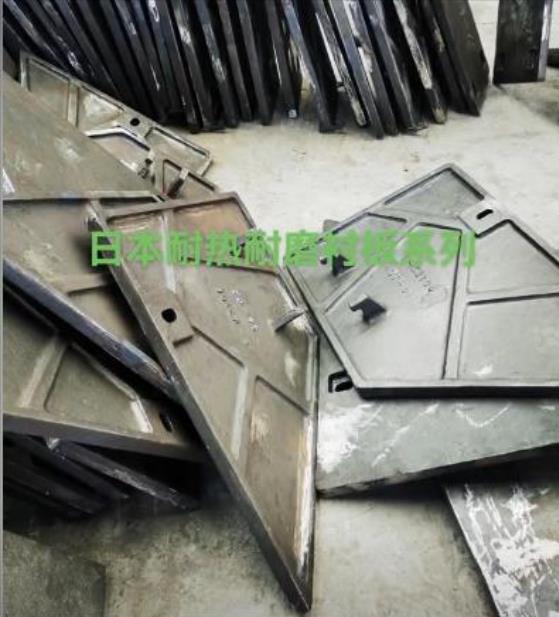
Wear & Heat Resistant Alloy Liners
1. Product Positioning & Application Fields
Wear and heat resistant alloy liners serve as core protective wear-resistant castings for equipment inner walls under high-temperature and abrasive working conditions. A multi-series alloy material system is adopted, including high chromium wear-resistant cast iron, nickel-chromium heat-resistant alloy, austenitic wear-resistant alloy and other grades. The ratio of alloying elements such as Cr, Ni, Mo and W can be adjusted according to working conditions. The material integrates high-temperature strength, oxidation resistance, thermal fatigue resistance and resistance to material erosion and abrasion. It withstands cyclic hot-cold alternation, high-temperature oxidation and solid particle impact friction, lowering the risk of deformation, cracking and spalling under high temperatures.
Product Positioning: Custom wear and heat-resistant lining spare parts for metallurgy, building materials and mining industries. Produced by sand casting or shell mould precision casting. The liners are used for inner wall protection of sintering machines, rotary kilns, crushers, kilns, silos, pipelines and other equipment. OEM replacement supply is available, and products can be exported to overseas metallurgical and building material engineering projects.
Application Fields: Iron and steel metallurgy sintering and roasting systems, rotary kilns and preheaters in cement and building materials industry, mining crushing and silo systems, solid waste incineration equipment, chemical high-temperature reaction kilns, thermal power feeding systems.
Working Conditions: Combined conditions of high temperature, particle erosion, hot-cold alternation and abrasion-corrosion. Operating temperature ranges from 200℃ to 1200℃.
Applicable Materials: Sinter, cement clinker, ore, slag, fly ash and other high-temperature particulate materials.
2. Manufacturing Capability Overview
Paljet owns an integrated production line for ferrous metal casting, heat treatment and machining. Wear and heat resistant alloy liners can be produced by multiple precision casting processes including resin sand casting and coated sand shell mould casting. The workshop is equipped with medium-frequency melting furnaces, heat treatment furnaces, direct-reading spectrometers and hardness testing equipment. The complete technological process is as follows:
Mold Fabrication and Moulding: Process metal molds or wood patterns according to 2D drawings or 3D models. Select resin sand or coated sand shell moulding based on product structure. Optimize the gating and riser system to control shrinkage porosity, blowholes and slag inclusions, ensuring casting dimensional accuracy and surface quality.
Batching and Smelting: Select premium scrap steel, ferrochrome, ferronickel, ferromolybdenum, ferrotungsten and other alloy raw materials, melted in medium-frequency electric furnaces. A direct-reading spectrometer monitors molten metal composition in real time to precisely control the content of carbon, chromium, nickel, molybdenum, silicon and other alloying elements.
Pouring and Directional Cooling: Set pouring temperature according to alloy grades, control the solidification sequence inside sand moulds or shell moulds, reduce internal thermal stress of castings and mitigate thermal cracking tendency.
Shakeout, Sprue & Riser Cutting and Shot Blasting: Remove moulds after pouring and cooling; cut off sprues and risers. Shot blasting removes burned-on sand and oxide scale on surfaces and exposes tiny casting defects.
Heat Treatment (Core Process): Implement dedicated heat treatment procedures for different alloy grades, including stress relief annealing, quenching, tempering and solution treatment. Optimize the metallographic structure of the matrix to improve high-temperature strength, thermal fatigue resistance, wear resistance and oxidation resistance.
Finish Machining: Perform CNC machining on assembly positioning surfaces, flange surfaces and mounting bolt holes to guarantee dimensional accuracy of liners and achieve tight fitting installation with equipment bodies.
3. Quality Control & Inspection
The company follows the ISO9001 quality management system and carries out full-process quality control and batch traceability from raw material incoming inspection to finished product delivery.
Raw Material Incoming Inspection: Acceptance inspection for scrap steel, ferrochrome, ferronickel and other alloy auxiliary materials; spectral composition recheck before smelting.
In-process Inspection: Continuously record melting temperature, pouring temperature, heat treatment furnace temperature and holding & cooling curve. Test coupons of the same material are cast with each batch for mechanical and high-temperature performance tests.
Finished Product Inspection Items
Visual inspection: Check surface casting defects including burned-on sand, cold shut, cracks, blowholes and slag inclusion.
Dimensional inspection: Use calipers, templates and 3D scanning to inspect overall dimensions and assembly tolerances.
Mechanical property test: Brinell / Rockwell hardness and room-temperature impact toughness test.
Non-destructive testing: Magnetic Particle Testing (MT) and Penetrant Testing (PT), focusing on surface microcracks on assembly surfaces and working surfaces.
Sampling test for high-temperature performance: High-temperature oxidation resistance, thermal fatigue and high-temperature wear tests can be conducted upon request.
Batch File Management: Complete records of melting, heat treatment and inspection are retained for each batch. Material certificates and factory inspection reports can be provided upon request.
4. Customization Process
OEM and ODM customization is available. Wear and heat resistant alloy liners with different materials and specifications can be customized according to equipment models and site working conditions:
Technical Communication: Customers provide equipment model, drawings or photos of liners, as well as working condition parameters (operating temperature, material characteristics, impact load, operation cycle and failure mode of original liners).
Material Scheme Confirmation: Engineers evaluate working conditions and recommend suitable grades such as high chromium cast iron or nickel-chromium heat-resistant alloy. Alloy elements including Mo and W can be added as required to improve wear and heat resistance.
Quotation & Lead Time Confirmation: Issue formal quotation after technical review and confirm the production cycle.
Mold Development: Design and manufacture corresponding casting molds for brand-new non-standard products.
Trial Casting & Sample Inspection: Produce trial samples, complete full inspection and issue inspection reports.
Mass Production: Start batch casting after customer approval of samples.
Final Inspection, Anti-rust Protection, Packaging & Shipment: Re-inspection before delivery, anti-rust protection, wooden pallet packaging and logistics arrangement.
Note: The above information is reviewed by Engineer Song Enyu from PALJET.
Next product:Lost Foam Cast Universal Joint Yoke CastingsPrevious product:High Chromium Cast Iron Grate Bars Made by Coated Sand Process